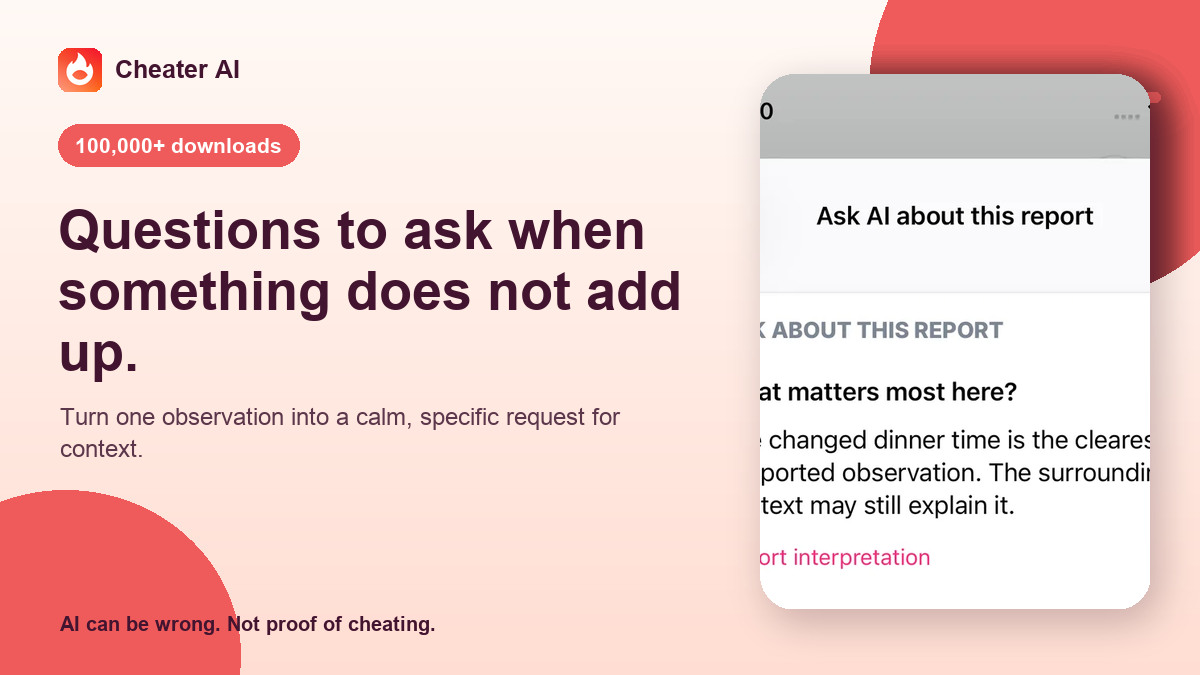
Use an observation-first question
A useful question has three parts: the detail you observed, the context you are missing, and the clarification you want. It avoids labels such as liar or cheater before the evidence can support them.
Questions for changed plans or timelines
- “You said work would end at six, then mentioned leaving at eight. Did the schedule change?”
- “These two messages seem to describe the same evening differently. Are they about different dates?”
- “The screenshot starts after the plan was discussed. What happened in the messages before it?”
Keep the original times and sequence visible. A proposed plan can change without the first message becoming a lie.
Questions for an unclear message
- “When you wrote that you missed how things used to be, what relationship were you describing?”
- “I asked whether this was a work dinner, but I do not see an answer in the thread. Was it work-related?”
- “This reply sounds different from how I understood our boundary. How did you understand the agreement?”
Do not rely on punctuation, emojis, response time, or tone alone. The lying-over-text guide explains why those cues have many possible causes.
Questions for a public photo-source match
- “This same photo appears on this public page. What is the connection?”
- “The source page uses a different caption or name. Do you know why?”
- “Was this image reposted, licensed, or taken from another source?”
Treat an image match as a source lead: open the page, compare the actual image, and verify the surrounding profile details before asking.
Questions for an Instagram count change
- “The public following total changed between these two dated checks. Is there context you want me to understand?”
- “This count moved after our conversation about contact with an ex. Can we clarify the boundary we agreed to?”
A net total records the visible difference between dated checks. Ask about the relevant boundary and keep the number alongside the surrounding context.
What to do with the answer
- Listen for whether the response addresses the exact detail.
- Compare the explanation with the original messages, dates, or source page.
- Write down new context that weakens as well as strengthens the concern.
- Ask one follow-up if a material fact remains unclear.
- Pause if the conversation becomes unsafe, coercive, or impossible to continue calmly.
The broader next-step checklist can help you prepare before starting the conversation.
How Ask AI can help
After Cheater AI creates a report, Ask AI can help identify the strongest supported concern, the weakest inference, or the context that would change the read. It stays grounded in the case you provided and helps you review the evidence already there.
Ask for context, not a confession
The goal of the first question is to understand one inconsistency clearly. A calm, specific question is more useful than a list designed to corner someone into confirming a conclusion.
Sources and limits
The Cheater AI product team uses these public sources to explain factual limits responsibly. They do not imply clinical, therapeutic, legal, or other professional review of this guide.
- National Domestic Violence Hotline safety planning
Safety-planning resources for situations where asking questions or using a device may create risk.
- NIST AI Risk Management Framework
A framework for managing AI limits and trustworthiness rather than treating an output as a verdict.