The direct answer
No AI app can prove someone is cheating from a chat, photo, or follower count alone. AI can identify patterns in the material it receives. That is different from determining what happened outside that material or why someone acted a certain way.
The input may be incomplete, cropped, ambiguous, or wrong. The analysis can also make mistakes. A useful system shows the evidence behind its read and keeps uncertainty visible.
What AI analysis can help with
- Summarizing a long conversation so relevant details are easier to find.
- Flagging apparent inconsistencies in dates, plans, or statements.
- Separating a supported observation from an interpretation.
- Suggesting other explanations and identifying missing context.
- Turning a broad concern into a specific follow-up question.
How to read the score
Read a score as a description of how clearly the supplied evidence supports the report’s reasoning. Check whether a product has validated any separate probability claim before treating a number that way.
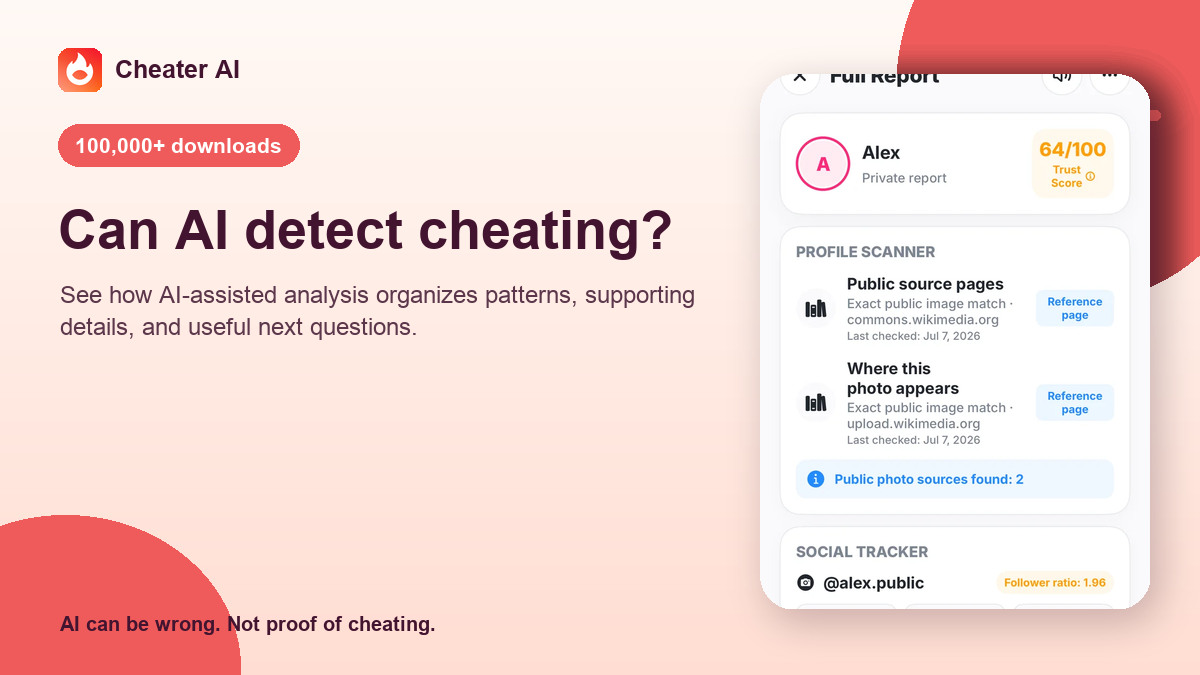
In Cheater AI, the score describes how clearly the available evidence supports the report’s read. Inspect the messages, source links, and reasoning underneath it.
Photo sources have limits
A public photo-source result means a matching image appeared on a public page. Treat that page as source context, with identity and account ownership verified separately.
Instagram counts have limits
An Instagram count change records the difference between visible totals at two times. Use that dated observation alongside the surrounding evidence and context.
How to assess an AI report
- Return to the original evidence and verify quotes, dates, and speakers.
- Check whether each observation points to a specific source.
- Look for missing context that could change the interpretation.
- Compare a concerning explanation with an ordinary one.
- Prefer a specific question over an unsupported accusation.
- Do not make a consequential decision from an app output alone.
AI is most useful when you already have evidence
Cheater AI is designed for a structured second look at messages, screenshots, photos, notes, and public changes you choose to provide. It works best when you want a structured second look at evidence you already have.
Try the example before downloading
The fictional report example shows exactly how Cheater AI separates a supported timing concern from conclusions the evidence cannot prove.
Sources and limits
The Cheater AI product team uses these public sources to explain factual limits responsibly. They do not imply clinical, therapeutic, legal, or other professional review of this guide.
- NIST AI Risk Management Framework
A framework for managing AI limits and trustworthiness rather than treating an output as a verdict.
- Accuracy of deception judgments, PubMed record
Research record supporting caution about deciding whether someone is lying from behavioral cues alone.